


By Dilip David, Canada Notary | Virtual & In01Person Notary Services Nationwide
Remote online commissioning has emerged as a vital service for individuals and businesses in Ontario, enabling them to authenticate documents without requiring physical presence. This innovative approach combines technology with legal principles, offering convenience and efficiency. In this comprehensive article, we will delve into the legality, procedures, and requirements surrounding remote online commissioning, providing clarity for both users and practitioners. By understanding these aspects, individuals can navigate the process effectively while ensuring compliance with Ontario’s legal framework. As we explore this topic, we will also highlight specific steps involved in the commissioning process, the necessary documentation, and how users can access online notarization services through various platforms.
What Are the Legal Requirements for Remote Online Commissioning in Ontario?
Remote online commissioning in Ontario is governed by specific legal requirements aimed at ensuring validity and security. The primary prerequisites include the identity verification of individuals involved, the use of real-time communication technologies, and adherence to specific documentation protocols. Notably, the modified jurat inclusion is critical, affirming that an individual has taken an oath before a commissioner through a virtual medium. This legal framework underscores the balance between technological advancement and maintaining the integrity of legal processes in Ontario.
How Is Legal Validity of Remote Notarized Documents Ensured?
The legal validity of remote notarized documents is upheld through several factors that ensure the authenticity and integrity of the signing process. First, thorough verification of the identity of the signatory is paramount, typically conducted through valid government-issued photo IDs. Second, the presence of a commissioner during the signing process adds an extra layer of assurance, as the commissioner must observe the signing in real-time. Furthermore, the inclusion of a modified jurat provides explicit acknowledgment of the virtual commissioning process, thus conforming to the required legal standards.
As digital authentication becomes more prevalent, legal scholars emphasize the necessity of maintaining rigorous professional standards to balance modernization with the integrity of the notarial role.
Ethical Challenges of Cyber Notary and Digital Authentication
The rapid progression of information technology and the expansion of the digital economy have increased the demand for notarial services that are efficient, accessible, and electronically integrated. This disparity creates an ethical challenge and may undermine the integrity of the notarial profession, since efforts to modernise notarial services can conflict with the legal requirements that verify the authenticity of notarial deeds. This article examines compliance with the standards of vigilance and prudence required of notaries in providing electronic services, particularly with identity verification, legal capacity, informed consent, and the reading of The Ethical Dilemma and Integrity of the Notary Role in the Execution of Cyber Notary: Challenges to the Requirement of Physical Deed Review, 2026
How Does the Remote Online Commissioner of Oaths Process Work in Ontario?
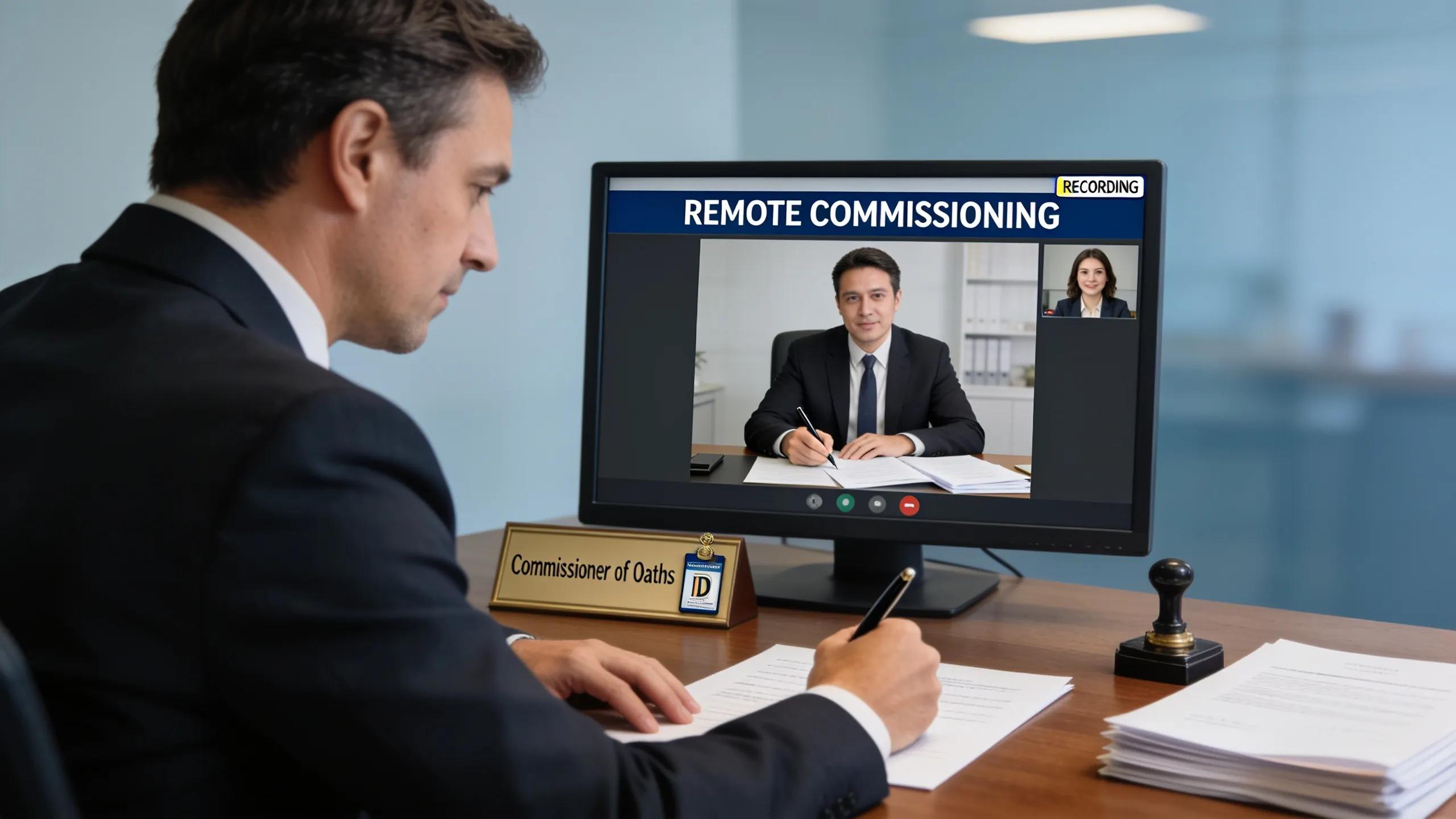
The process for remote online commissioning in Ontario is designed to be user-friendly and secure, ensuring that all necessary steps are followed. Here are the main stages involved:
- Booking Appointments: Users typically begin by scheduling a virtual appointment with a commissioner of oaths, which can often be done online through various platforms.
- Identity Verification via Video Call: During the appointment, users must present their identification documents to the commissioner via a secure video call to verify their identity.
- Finalization of Documents: After identity verification, users will sign the documents while the commissioner observes, followed by the commissioner affixing their signature and seal to complete the notarization process.
This structured approach not only streamlines the commissioning process but also ensures compliance with legal standards inherent to the act of notarization.
What Are the Step-by-Step Procedures for Virtual Oath Commissioning?
The step-by-step procedure for virtual oath commissioning can be summarized as follows:
- Preparation for Video Call: Users should gather their documents and identification, ensuring they have a stable internet connection before the scheduled appointment.
- Signing Process: Users sign the document digitally while the commissioner observes, confirming that the signature was made willingly and in their presence.
- Receiving Notarized Documents: Following the successful completion of the signing, the user receives their notarized documents via secure email or another agreed-upon method.
By adhering to these steps, users can efficiently navigate the virtual commissioning landscape and ensure their documents are legally binding.
What Documents and Identity Verifications Are Required for Remote Commissioning?

Understanding the specific documents and identity verifications needed for remote commissioning is crucial for a smooth process. The following table outlines the necessary components:
This table highlights the importance of proper documentation, ensuring that all legal requirements are met prior to initiating remote online commissioning.
How Can Users Book and Access Remote Online Notarization Services in Ontario?
Users looking to access remote online notarization services in Ontario can do so through various channels. The following steps outline the general approach:
- Determine Eligibility: Users must confirm that their documents qualify for remote commissioning under Ontario law.
- Choose Service Provider: It’s important to select a reputable service provider that offers online notarization services.
- Prepare for Appointment: Prior to the meeting, individuals should collect all necessary documentation and ensure they have a reliable internet connection.
By understanding these steps, users can successfully engage with remote online notarization services, ensuring that their needs are met efficiently.
As Ontario’s regulatory bodies continue to adapt to these technological shifts, researchers are actively studying how these changes influence the broader landscape of professional services in the province.
Digital Transformation in Ontario’s Regulated Professions
Technology is transforming service delivery and practice in many regulated professions, altering required skills, scopes of practice, and the organization of professional work. Professional regulators face considerable pressure to facilitate technology-enabled work while adapting to digital changes in their practices and procedures. However, our understanding of how regulators are responding to technology-driven risks and the impact of technology on regulatory policy is limited. To examine the impact of technology and digitalization on regulation, we conducted an exploratory case study of the regulatory bodies for nursing, law, and social work in Ontario, Canada. Professional regulation in the digital era: A qualitative case study of three professions in Ontario,
Canada, K Leslie, 2024
What Online Appointment Systems Facilitate Booking Virtual Commissioners?
Several online appointment systems facilitate the booking process for virtual commissioners. These platforms typically include features such as:
- User-friendly Interface: An easy-to-navigate website that allows users to book appointments with minimal hassle.
- Secure Payment Options: Various payment methods ensure user convenience and security.
- Appointment Management: Users can reschedule or cancel appointments through the same platform.
Investing time in selecting the right appointment system can greatly enhance the overall experience of the commissioning process.
What Are the Typical Costs and Pricing Structures for Remote Online Commissioning?
When exploring remote online commissioning services, users should be aware of the typical costs associated with these services. Most services offer a flat fee structure, which may vary based on the complexity and number of documents. For example, individuals might expect costs to start around $50 for basic commissioning, with additional fees for more complex legal documents or multiple signatories. Discounts may also be available for clients who require multiple documents to be notarized, providing a cost-efficient solution for businesses and individuals alike.
What Is the Difference Between a Commissioner of Oaths and an Online Notary?
Understanding the distinction between a commissioner of oaths and an online notary is critical for users seeking these services. The following points outline their differences:
- Roles and Responsibilities: A commissioner of oaths administers oaths and affirmations but does not deal with certain document types that a notary public might oversee.
- Legal Authorities: Commissioners typically operate within specific jurisdictions and have limitations on the types of documents they can notarize.
- Types of Documents Handled: While both can handle legal documents, notaries may perform additional functions like international certification.
By recognizing these distinctions, users can better navigate their options and choose the right professional for their needs.
Which Documents Can Be Notarized or Commissioned Online in Ontario?
Not all documents are eligible for remote notarization, but many common forms can be processed online. Examples include:
- Affidavits: Sworn statements that are often required in legal matters.
- Statutory Declarations: Legal declarations made pursuant to statutory requirements.
- Professional Applications: Documents necessary for job applications or professional licensing.
Understanding which documents can be processed online equips users with the knowledge needed to engage effectively with remote online commissioning services.