

Notarization and attestation are both crucial processes in the realm of legal documentation, particularly in Canada, where individuals and businesses often require these services for various transactions. Understanding the differences between notarization and attestation is essential for anyone looking to ensure their documents are legally recognized in domestic and international settings. This article will outline the core concepts, the legal implications of each process, and how individuals can navigate the requirements for notarization and attestation in Canada.
As we explore these key differences, you will learn not only about the definitions and purposes of notarization and attestation but also the specific processes involved in each. By clarifying the distinctions, readers can avoid common pitfalls and make informed decisions about their documentation needs.
Notarization
Notarization is the legal process in which a notary public verifies the authenticity of a document by signing and affixing their official seal. This procedure serves several purposes, such as preventing fraud and ensuring that the parties involved understand the content and implications of the documents being executed. Notaries in Canada carry a recognized authority that allows them to authenticate a variety of documents effectively.
The role of a notary public is foundational in this process. Canadian notaries are typically responsible for certifying the identities of individuals involved in the signing of documents and ensuring that they are acting voluntarily and with a sound understanding of the contents. Common documents that require notarization include legal agreements, affidavits, and powers of attorney.
For those looking for notarial services in Canada, Canada Notary provides comprehensive notary services to help individuals and businesses in the notarization process.
Attestation

Attestation refers to a more formal process that verifies the authenticity of a document, often involving the confirmation of a signature or the witnessing of a signature by an authorized individual. In Canada, attestation is frequently required for documents intended for international use, where additional validation might be necessary for acceptance in foreign jurisdictions.
The concept of attestation includes examining documents for accuracy and compliance with legal standards. Attested documents often require the signature of a person of authority, acting as a witness to the authenticity of the signature on the document. Typically, attestation is utilized for documents like educational certificates, immigration papers, and legal agreements that need to be submitted to foreign authorities.
If you are looking to book attestation services, it is essential to understand the processes involved. Canada Notary can assist clients in navigating the requirements for attestation in a straightforward manner, making the process more accessible.
How Is Attestation Different from Notarization?
While both notarization and attestation serve to authenticate documents, they differ fundamentally in their processes and implications. Notarization generally involves the official action of a notary public who certifies the identity of the signer, ensuring they are executing the document willingly. Conversely, attestation may not necessarily involve a notary; it often requires a witness who confirms the act of signing.
In terms of the authority involved, a notary public operates under specific regulations and licensing, whereas attestation may involve other authorized individuals, which can lead to variations in the level of credibility. Additionally, attested documents are often required by entities outside Canada, whereas notarized documents are primarily used within Canadian legal contexts.
What Types of Documents Need Attestation for Domestic and International Use?
Determining which documents require attestation involves understanding their intended use. Common documents that necessitate attestation for domestic use may include educational credentials, business contracts, and immigration paperwork. For international use, documents like marriage certificates, birth certificates, and academic transcripts often require attestation to authenticate them for foreign entities or governments.
It’s important for individuals to review the specific requirements of the destination authority to ensure compliance. Ultimately, clarity on which documents need attestation versus notarization can save time and prevent complications during the documentation process.
Key Differences
The key distinctions between notarization and attestation can greatly influence how individuals approach their document preparation needs. Here’s a summary of the primary differences:
- Authority: Notarization typically requires a certified notary public, while attestation may involve a witness.
- Purpose: Notarization serves to verify identity and understanding of document contents, while attestation focuses on validating signatures or the authenticity of the document itself.
- Usage: Notarized documents are often used within Canada, whereas attested documents are crucial for international transactions.
Understanding these differences allows individuals to choose the right service for their specific needs.
Legal Implications
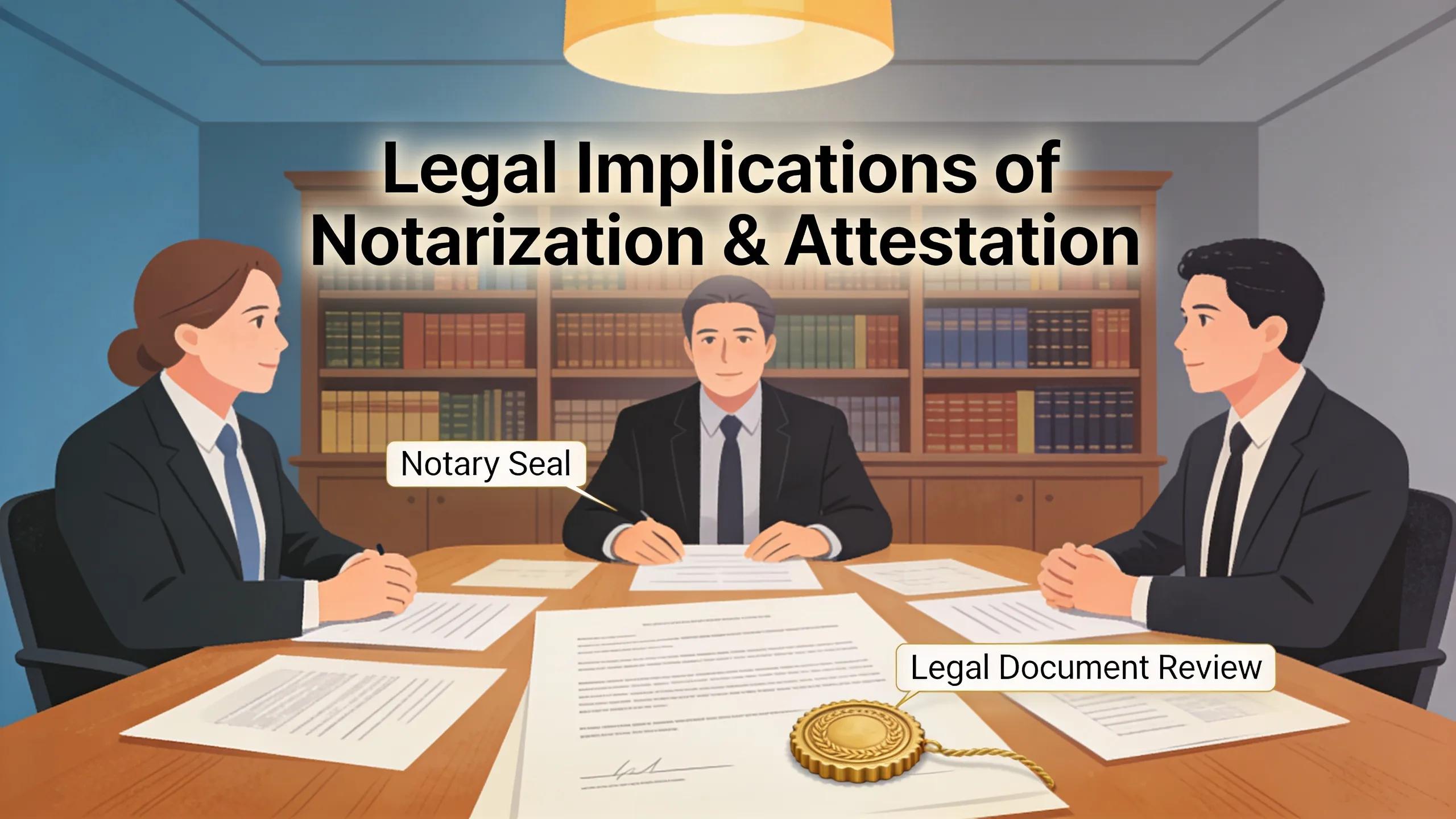
The legal implications surrounding notarization and attestation vary significantly based on their functions and mandatory requirements. Notarized documents generally carry a presumption of legitimacy within Canada, often making it easier to enforce agreements in legal contexts. Failure to properly notarize a document may lead to disputes or undermine its legality.
Conversely, documents requiring attestation typically follow stricter validation procedures expected by foreign authorities. Ensuring that attestation is correctly applied can prevent significant hurdles during international dealings. Understanding these varying legal implications is essential for anyone involved in the process of document certification.
What Is the Notarization Process in Canada?
The notarization process in Canada typically involves several steps:
- Document Preparation: Ensure all documents intended for notarization are complete and available.
- In-Person Meeting: Schedule an appointment with a notary public, such as those at Canada Notary.
- Verification: Present identification and sign the document in the presence of the notary public.
- Certification: The notary will complete the notarization by signing and sealing the document.
It is important to consider the possible timeframes for the notarization process, which can vary based on the complexity of the documents and the availability of the notary.
What Role Does a Notary Public Play in Document Certification?
A notary public serves as an impartial witness in the process of document signing and certification. Their primary responsibilities include ensuring the identities of all parties are verified through identification, confirming that no coercion is involved, and clarifying the implications of the documents being signed. The independent role of a notary is critical in establishing the legal validity of the documentation.
A notary public not only affixes their seal but also keeps records of the notarial act, which serves as proof that the document was executed correctly and that due process was followed.
Which Documents Require Notarization for Legal Validity?
Several documents commonly require notarization to uphold their legal validity. Key examples include:
- Wills: Ensuring the testator’s intentions are clearly represented and legally binding.
- Real Estate Transactions: Certifying agreements related to property sales or leases.
- Powers of Attorney: Granting authority to another person to act on one’s behalf.
Adhering to the legal verification methods provided by a notary can help avoid future complications with these documents.
What Does Attestation Mean and When Is It Required in Canada?
Attestation signifies a formal confirmation of a document’s authenticity, often required in contexts involving foreign submissions. This process typically entails a statement or signature from an authorized individual, verifying that the signatures on the documents are genuine and that the documents themselves are valid.
In Canada, attestation is crucial in scenarios requiring proof of identity, especially when engaging with international institutions or authorities. Understanding the nuances of attestation can significantly influence how documents are processed both domestically and abroad.
How Does Document Legalization Compare to Notarization and Attestation?
Document legalization involves multiple steps that may include both notarization and attestation depending on the destination’s requirements. Legalization generally entails approval by a governmental body or consulate, confirming that the document is in line with legal standards before acceptance in a foreign jurisdiction.
While notarization and attestation lay the groundwork for document validity, legalization acts as the final affirmation for international use, making it a more rigorous process involving multiple levels of verification.
What Are the Steps for Document Legalization in Canada?
The steps involved in document legalization typically include:
- Notarization: Acquire notarization from a qualified notary public.
- Verification: Submit the notarized document to the relevant governmental office or department.
- Consulate Approval: If required, present the notarized document to the embassy or consulate of the destination country for final verification.
This multi-step process underscores the importance of understanding the requirements for each jurisdiction to ensure all necessary steps are meticulously followed.
Which Authorities Are Involved in Document Legalization?
Document legalization in Canada often involves several key authorities, including:
- Global Affairs Canada: They handle the initial verification and can provide necessary documents for international usage.
- Embassies and Consulates: These entities may impose further requirements for document acceptance in their respective countries.
- Notary Public: They provide initial certification through notarization, signaling the document’s authenticity.
Understanding the roles of these authorities can help individuals navigate the required processes effectively and avoid potential delays.
How Can Clients Book Notarization and Attestation Services in Canada?
Booking notarization and attestation services in Canada involves several straightforward steps designed for client convenience:
- Contacting a Notary: Clients can reach out to a notary service provider like Canada Notary via phone or through appointment scheduling on their website.
- Choosing Service Options: Clients should confirm whether they need notarization, attestation, or both, as this will affect documentation requirements.
- Preparation: Ensure that all necessary documents and identification are at hand for the appointment.
Being well-prepared not only helps streamline the appointment but also ensures that all legal obligations are met promptly.
What Are the Available Options for Booking Online Appointments?
Clients have several options for booking their appointments online, making it easier than ever to access notarial services. Options can include:
- Web-Based Scheduling: Many notaries offer online booking through their websites for convenience.
- Mobile Notary Services: Some companies provide mobile notary options, allowing professionals to meet clients at various locations.
- Walk-In Services: Some notaries may allow for walk-in services, providing flexibility for last-minute needs.
With multiple booking mechanisms, individuals can easily access the services they require without extensive delays.
What Should Clients Prepare Before Their Notary or Attestation Appointment?
Preparation is key to ensuring a smooth experience when seeking notarization or attestation services. Clients should consider the following checklist before their appointment:
- Identifications: Bring valid ID to confirm identity.
- Required Documents: Ensure that all documents that need to be notarized or attested are complete.
- Clarifying Questions: Prepare any questions regarding the process or requirements to clarify potential doubts with the notary.
Arriving well-prepared not only facilitates a smoother process but also helps in maximizing the efficiency of the appointment.
What Are Common Scenarios and Frequently Asked Questions About Notarization and Attestation?
Understanding the common scenarios surrounding notarization and attestation can aid individuals in making informed decisions regarding document preparation. Many individuals often inquire about:
When Is a Notarized Document Required versus an Attested Document?
A notarized document is generally required in situations involving legal contracts or agreements within Canada, while an attested document is vital for documents intended for use outside the country. Recognizing these scenarios is critical in preventing legal missteps.
How Do COVID-19 Protocols Affect Notarization and Attestation Services in Canada?
The COVID-19 pandemic has influenced the processes for notarization and attestation, with many notaries adopting remote services for client safety. Current practice often includes virtual appointments assessed by notaries via secure video calls, allowing individuals to maintain crucial services while adhering to health guidelines.
By focusing on these adaptations, clients can ensure that their documentation needs are met safely and effectively during challenging times.